Snowy on the Wing

photo courtesy of Dennis Swayze

As previously mentioned…this winter there has been an abundance of Snowy Owls. I can’t imagine the condition of some of the backroads that I would normally travel with all the Snow that we’ve had.
Still there are many well-traveled roads that will be plowed like the location where this one was found.

May recall the Snowy on a snag and using the grain bin as a blind…well this was a continuation of what unfolded when he decided to finally take flight.
Note the talons…this is the business end of things that all Birds of Prey use to catch prey…much like large barbless fish hooks.

Snowy Owls main diet consist of mice/voles here in Manitoba and lemmings in the Tundra where the spend the summer and nest…like all owls they have extremely good hearing and vision.

Cheers !
Dennis
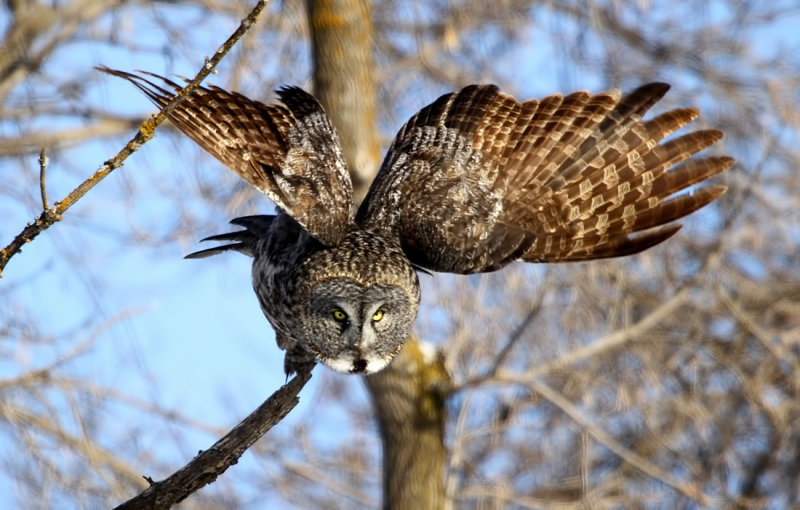
How do they do that ?

photo courtesy of Dennis Swayze

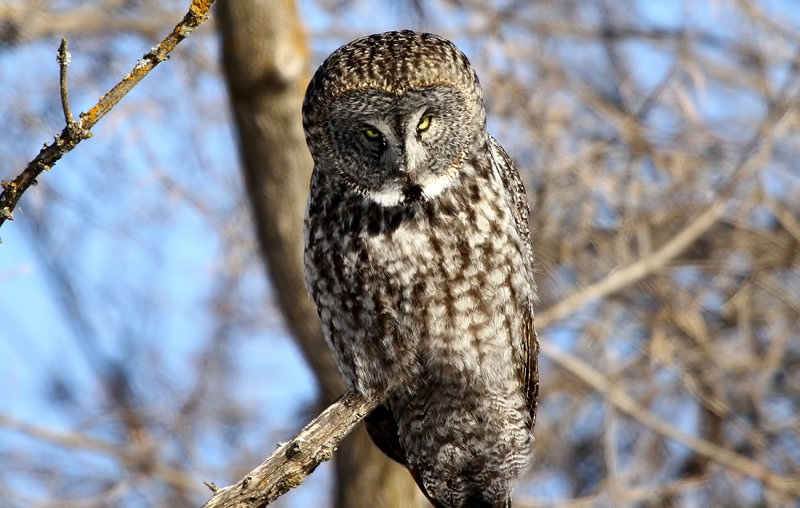
Watching an Active Great Gray is nothing short of amazing.
We as humans can only see a deep snow covered area…a Great Gray on the other hand has the ability to hear a mouse/vole deep beneath the snow.

Great Grays are seen perched in trees, on fence posts and poles where they sit and wait, listen and watch for prey. Their large flat face acts much like a radar dish…along with the ears being off-set that helps them pinpoint the location of prey under the snow.

Once they hear something and become focused they shift into position just prior to launching towards the unsuspecting prey. Not every attempt is successful and may take more than one try in the endless search for a meal.

Cheers !
Dennis

Another Day Another Gray

photo courtesy of Dennis Swayze

I’ve seemed to have developed a pattern by choosing Bone Chilling Days to search for the Winter Owls…but on the Plus Side the sun was out and the winds light and it didn’t feel like -30c.

The First Great Gray was less than cooperative and was situated in a backlit tree with many branches…the waiting game began for it to move but it wasn’t meant to be.

The second started out much the same when first spotted it but soon became active and was on the move from tree to tree.
For the most part Great Grays are very human tolerant and you simply watch and wait. Great Grays spend their day in an endless search for prey and must be extremely difficult with so much snow cover.

Interesting to watch them if they are active…the sudden head jerks then the prolonged stare as they zero in on something beneath the snow.
Sometimes the humans are on the receiving end of that stare…which Stops You Dead in Your Tracks.

Being witness to all this is a Pure Nature Rush.